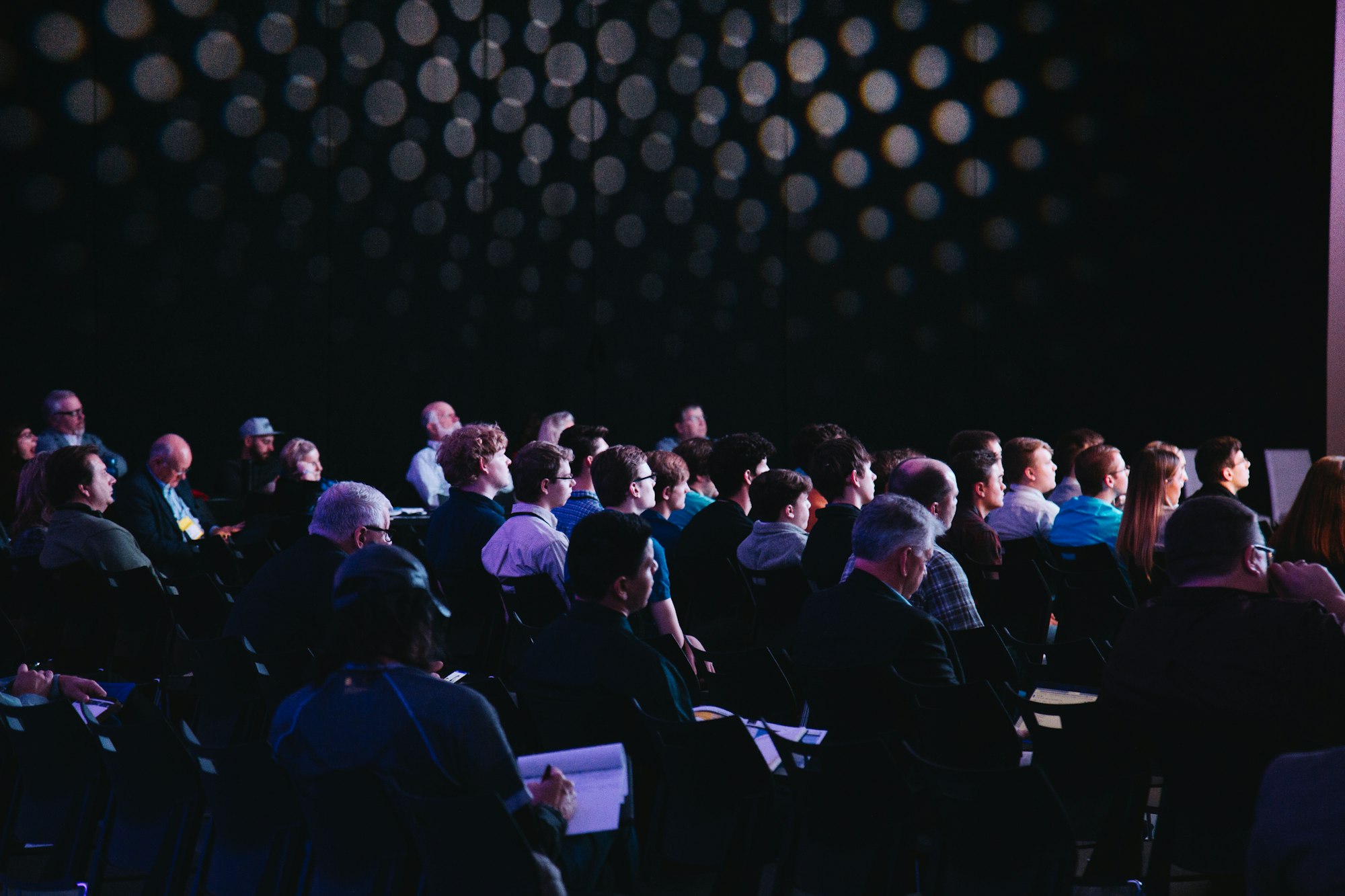
As we approach 2026, the event industry stands at an exciting crossroads. The innovations of recent years are evolving into mature technologies, while new possibilities emerge on the horizon. This preview explores the key event industry trends that will shape conferences, meetings, and celebrations in the year ahead.
Key Takeaways
- AI will move from assistant to co-creator in event planning
- Immersive technologies will create new engagement possibilities
- Micro-events and intimate gatherings will grow alongside mega-conferences
- Measurement and ROI will become more sophisticated and expected
Table of Contents
- AI-Powered Event Experiences
- Immersive Technology Integration
- The Rise of Micro-Events
- Advanced Personalization
- Sustainable Events 2.0
- New Venue Concepts
- Evolved Hybrid Models
- Measurement Revolution
AI-Powered Event Experiences
In 2026, AI will evolve from a planning tool to an integral part of the attendee experience.
What to Expect
AI Event Concierges: Personal AI assistants will guide attendees through events, answering questions, suggesting sessions, and facilitating introductions—all in natural conversation.
Predictive Event Design: AI will analyze past events, attendee data, and industry trends to recommend optimal formats, content, and scheduling before planning begins.
Real-time Adaptation: Events will adjust dynamically based on AI analysis of attendee engagement, energy levels, and feedback—extending popular sessions, adjusting room temperatures, or modifying schedules on the fly.
Content Generation: AI will create personalized event summaries, highlight reels, and follow-up materials for each attendee based on the sessions they attended.
Implementation Tips
- Start with AI chatbots for FAQ handling and basic assistance
- Gradually expand to recommendation engines and personalized communications
- Ensure human oversight remains for critical decisions and complex situations
Immersive Technology Integration
Extended reality (XR) technologies will create new possibilities for engagement and experience design.
Emerging Applications
Virtual Venue Extensions: Physical events will feature virtual “expansion spaces” where attendees can explore additional content, exhibitions, or networking areas.
AR-Enhanced Exhibitions: Augmented reality will transform static displays into interactive experiences, allowing attendees to visualize products, access deep-dive information, or see demonstrations without physical samples.
Immersive Keynotes: Speakers will incorporate spatial computing to bring concepts to life, surrounding audiences with data visualizations, virtual environments, or interactive simulations.
Virtual Event Twins: Major events will create detailed digital twins, allowing remote attendees to “walk through” venues and experience spatial aspects of gatherings.
Practical Considerations
- Start with smartphone-based AR (no special equipment required)
- Create optional immersive experiences rather than mandatory ones
- Ensure accessibility for attendees who prefer traditional formats
The Rise of Micro-Events
Alongside mega-conferences, 2026 will see significant growth in smaller, more focused gatherings.
Why Micro-Events Matter
Deeper Connections: Smaller groups enable more meaningful networking and discussion than massive conference floors.
Niche Focus: Highly specialized topics can attract dedicated audiences who might be lost in broader events.
Lower Barriers: Easier to organize, more affordable to attend, and simpler to iterate on.
Community Building: Regular small events build stronger communities than annual large gatherings.
Micro-Event Formats Gaining Traction
- Roundtable Dinners: 15-20 executives discussing specific challenges
- Mastermind Sessions: Peer groups meeting quarterly for deep dives
- Pop-up Experiences: Single-day, high-intensity experiences
- Unconferences: Attendee-driven agendas for spontaneous collaboration
Advanced Personalization
2026 will push personalization beyond schedule recommendations to truly individualized experiences.
Personalization Frontiers
Dynamic Content Paths: Content that adapts based on attendee expertise level, learning style, and engagement patterns.
Personalized Environments: Lighting, temperature preferences, and seating arrangements customized for individual attendees in smart venues.
Predictive Networking: AI that understands not just who you should meet, but when, where, and why—with suggested conversation topics.
Post-Event Intelligence: Customized follow-up paths including relevant content, connections to nurture, and actions to take based on individual event experience.
Privacy Considerations
- Transparent data collection and usage policies
- Opt-in personalization with clear benefits explained
- Easy ways to adjust privacy preferences during events
Sustainable Events 2.0
Sustainability will evolve from checkbox compliance to competitive advantage and creative differentiator.
Next-Level Sustainability
Regenerative Events: Moving beyond carbon neutrality to events that actively benefit environments and communities.
Circular Event Economies: Materials, decor, and resources designed for reuse across multiple events and organizers.
Impact Measurement: Sophisticated tools to track, report, and improve sustainability metrics in real-time.
Community Investment: Events that leave lasting positive impacts on host cities beyond economic spending.
Practical Applications
- Partner with local environmental organizations
- Design event materials with end-of-life in mind
- Include sustainability storytelling in event narrative
- Make impact metrics visible to attendees
New Venue Concepts
The definition of “venue” will continue to expand and evolve in 2026.
Emerging Venue Trends
Distributed Venues: Single events taking place across multiple connected locations simultaneously.
Unconventional Spaces: Museums, parks, factories, and cultural sites becoming preferred over traditional convention centers.
Pop-up Event Spaces: Temporary venues designed specifically for single events, then repurposed.
Smart Traditional Venues: Historic venues upgraded with invisible technology for modern event needs.
Selection Criteria Evolution
- Venue technology infrastructure becoming as important as capacity
- Sustainability certifications increasingly required
- Flexibility for hybrid configurations expected as standard
- Local character and uniqueness valued over generic spaces
Evolved Hybrid Models
Hybrid events will move beyond simultaneous streaming to sophisticated multi-modal experiences.
Hybrid 2.0 Features
Asynchronous Options: Events designed for consumption across time zones and schedules, not just live participation.
Role Switching: Attendees moving fluidly between in-person and virtual participation across an event.
Layered Content: Different content experiences for different participation modes, each optimized for its medium.
Unified Communities: Year-round digital engagement connecting annual in-person gatherings.
Success Factors
- Design for each modality separately, then integrate
- Create exclusive value for both in-person and virtual attendees
- Build anticipation through pre-event engagement
- Extend value through post-event content and community
Measurement Revolution
2026 will bring unprecedented sophistication to event ROI measurement.
Measurement Advances
Attribution Modeling: Better tracking of how event participation influences business outcomes over time.
Sentiment Analysis: Real-time understanding of attendee emotions and engagement through multiple signals.
Behavioral Analytics: Deep insights into attendee movements, interactions, and decision patterns.
Predictive Outcomes: AI models predicting event ROI before investment based on historical patterns.
Key Metrics for 2026
- Return on Event (ROE) beyond simple ROI
- Relationship Value Index measuring connection quality
- Knowledge Transfer Score quantifying learning outcomes
- Community Health metrics for ongoing engagement
- Sustainability Impact scores
FAQ
What’s the biggest trend to watch for 2026?
AI integration moving from behind-the-scenes planning tool to front-and-center attendee experience will be the most transformative trend. Events that effectively blend AI capabilities with human connection will set new standards.
Will virtual events decline as in-person returns?
No—virtual participation will remain strong but evolve. Rather than standalone virtual events, expect more sophisticated hybrid models and year-round digital engagement strategies complementing in-person gatherings.
How should event planners prepare for these trends?
Start by auditing your current technology stack and identifying gaps. Invest in data infrastructure to support personalization. Build partnerships with technology providers. Most importantly, maintain focus on attendee needs—technology should serve experience goals, not drive them.
Are these trends relevant for all event types?
Yes, though implementation varies. A small nonprofit fundraiser and a major tech conference will apply these trends differently, but the underlying principles of personalization, sustainability, and technology-enhanced human connection apply universally.
Conclusion
The event industry in 2026 will be characterized by smart technology, sustainable practices, and deeply personalized experiences. The most successful events will master the balance between technological capability and human authenticity—using AI and immersive tech to enhance rather than replace genuine connection.
For event professionals, the year ahead offers exciting opportunities to innovate, differentiate, and create memorable experiences. The foundations laid now in technology adoption, sustainability commitment, and audience understanding will determine who leads the industry forward.
Related Articles: