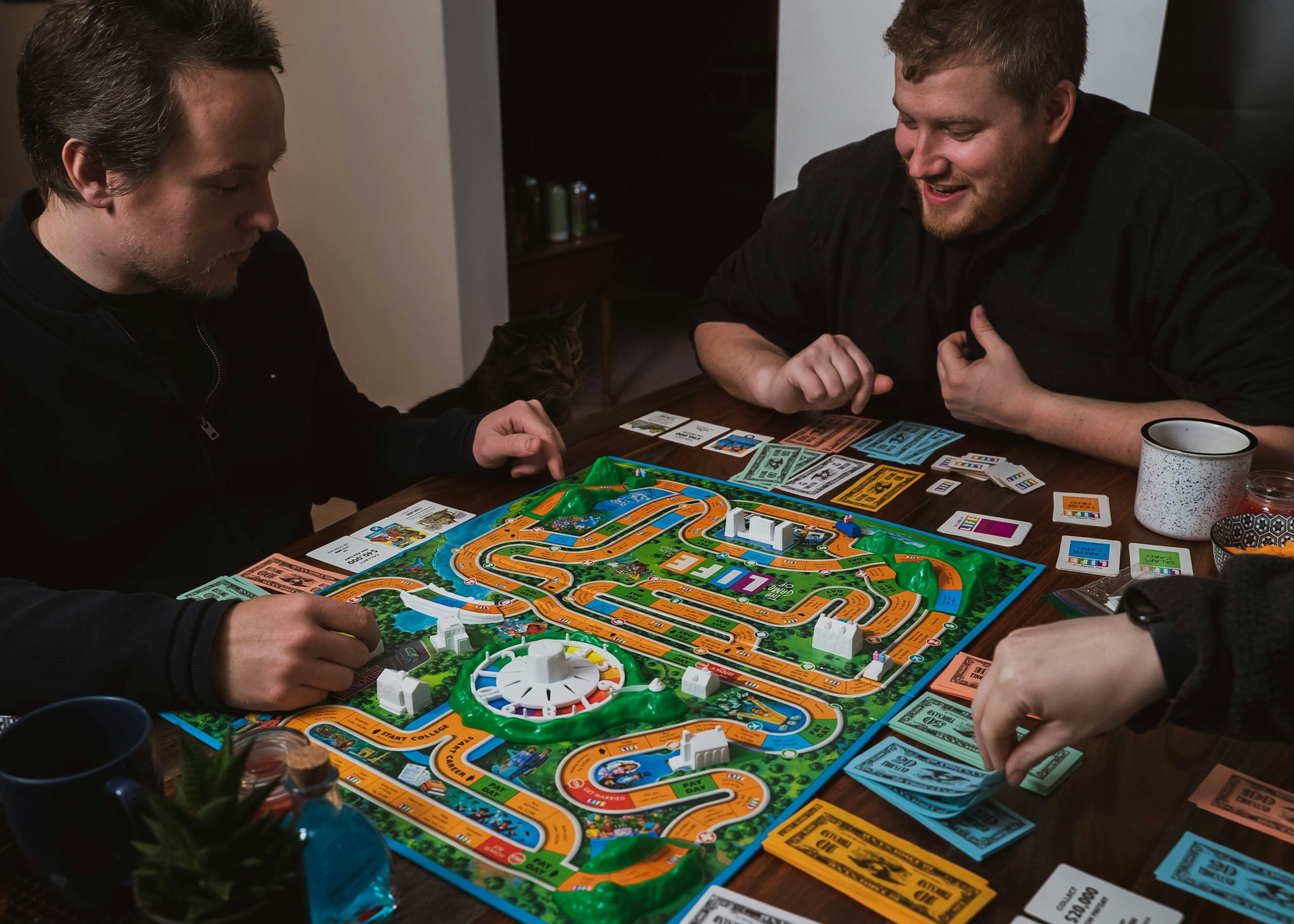
The global board game market hit $18.5 billion in 2024 and is growing at nearly 11% annually — and that’s just the tabletop side of the equation. Add video games, trivia apps, and the booming board game cafe scene, and it’s clear that game nights have become one of the most popular social gatherings of the decade. According to an Eventbrite survey, 78% of guests remember the games more than the food at any party, which means getting your game selection right is the single most important decision you’ll make as a host. Whether you’re a seasoned Settlers of Catan strategist or someone who just discovered that Uno can end friendships, this guide covers everything you need to host an unforgettable game night — from board games to video games and everything in between.
Key Takeaways
- The board game industry is booming: Market value surpassed $18.5 billion in 2024 with a projected CAGR of 10.7%, driven by growing demand for face-to-face social experiences and digital detox culture.
- Match games to your group: The key to a great game night is selecting games that fit your group’s size, experience level, and energy — not just picking the “best” games.
- Budget-friendly entertainment: A full game night costs as little as $5-$10 per person when you leverage potluck food, BYOB drinks, and games you already own.
- Mix game types throughout the evening: Start with quick icebreakers, move into main events, and wind down with casual party games to keep energy flowing naturally.
- Video games aren’t just for solo play: Couch co-op and party video games like Mario Kart, Jackbox, and Overcooked are perfect for groups who prefer screens to cardboard.
- Consistency builds community: Monthly recurring game nights create stronger social bonds than one-off events — commit to a regular schedule.
Table of Contents
- Why Game Nights Are Having a Moment
- Planning Your Game Night: The Essentials
- The Best Board Games for Every Group
- Video Game Night: Couch Co-Op and Party Games
- Hybrid Game Nights: Mixing Board and Digital
- Food and Drinks That Work With Games
- Setting the Scene: Ambiance and Setup
- Game Night Variations and Themed Events
- Hosting for Different Group Sizes
- Building a Recurring Game Night Tradition
1. Why Game Nights Are Having a Moment {: #why-game-nights-are-having-a-moment}
Game nights aren’t a nostalgic throwback — they’re a cultural movement. In an era of infinite scrolling and screen fatigue, people are actively seeking out analog experiences that put them face-to-face with friends and family. The numbers tell a compelling story.
The Board Game Renaissance
The board game industry is experiencing unprecedented growth. Market research shows the global board game market reached approximately $18.5 billion in 2024, with projections pushing past $20 billion in 2025 — an 8.9% year-over-year increase. By 2034, the market is expected to nearly double, reaching $39 billion at a compound annual growth rate of 10.7%.
North America leads this surge, commanding 42% of the global market share in 2025. But this isn’t just an American phenomenon — the European market reached $5.29 billion in 2025, securing its position as the second-largest region for tabletop gaming.
What’s driving this growth? Several converging trends:
- Digital detox culture: As screen time concerns mount, board games offer a compelling analog alternative
- The board game cafe boom: Dedicated gaming venues are popping up in cities worldwide, introducing new audiences to modern tabletop games
- Social media discovery: TikTok and Instagram have become major discovery platforms for new games, with #BoardGameTok videos racking up billions of views
- Pandemic legacy: The surge in at-home gaming during COVID-19 lockdowns created lasting habits that continue to drive the market
Who’s Playing?
The demographics of game night have shifted dramatically. Young adults aged 12-25 now represent the largest player demographic at 38%, driven by social gaming trends and the board game cafe culture. Millennials aged 26-40 make up 31% of players, bringing purchasing power and a preference for complex strategy games.
Genre Preferences in 2025-2026
| Game Genre | Market Share | Trend |
|---|---|---|
| Strategy & War Games | 27.5% | Growing — driven by adult participation |
| Family Games | 26% | Stable — perennial favorites |
| Party Games | 18% | Growing fast — social media fuel |
| Cooperative Games | 12% | Growing — appeals to non-competitive players |
| Card Games | 10% | Stable — accessible entry point |
| Other (RPG, trivia, etc.) | 6.5% | Growing — niche but passionate |
The Video Game Party Scene
Meanwhile, the video game industry continues to evolve its social gaming offerings. Couch co-op — where multiple players share a screen and a sofa — has made a major comeback. Games like Overcooked 2, It Takes Two, and the ever-popular Mario Kart series prove that gaming together in the same room never went out of style. The Jackbox Party Pack series has become a game night staple, turning phones into controllers and making it easy for non-gamers to join in.
2. Planning Your Game Night: The Essentials {: #planning-your-game-night-the-essentials}
A successful game night doesn’t happen by accident. The best hosts think through logistics, game selection, and guest comfort before the first die is rolled. Here’s your planning framework.
Setting the Date and Time
| Time Slot | Best For | Duration |
|---|---|---|
| Friday 7-11 PM | Adult groups, no early Saturday plans | 4 hours |
| Saturday 5-10 PM | Families, couples, mixed groups | 5 hours |
| Sunday 3-7 PM | Casual afternoon, family-friendly | 4 hours |
| Weekday 7-9:30 PM | Close friends, quick games | 2.5 hours |
Pro tip: Always include an end time on your invitation. Open-ended game nights can drag on uncomfortably, especially for guests who have to work the next day.
The Guest List Sweet Spot
The ideal game night size depends on the games you plan to play, but most experienced hosts agree on these guidelines:
- 4-6 players: The sweet spot for most board games. Enough for team dynamics without long waits between turns
- 6-8 players: Good for party games and split-table setups where you run two games simultaneously
- 8-12 players: Best for party games, trivia, or video game tournaments
- 12+: Consider a tournament bracket format or multiple game stations
Game Night Planning Checklist
- Set date, time, and end time
- Create guest list (consider game compatibility)
- Send invitations 2-3 weeks ahead
- Select 4-6 games spanning different types
- Test-run any new games before the event
- Plan food and drinks (finger-food friendly)
- Set up game area with adequate seating and lighting
- Prepare a backup game in case your main pick doesn’t click
- Charge controllers / test tech if doing video games
- Have a rule summary printed or bookmarked for complex games
Invitations That Set the Tone
Your invitation should answer the key questions:
- What kind of game night? (Board games, video games, trivia, mix)
- Experience level expected? (“All experience levels welcome” vs. “Bring your A-game”)
- What to bring? (BYOB, a favorite game, a snack to share)
- Any themes? (80s arcade night, murder mystery, tournament style)
3. The Best Board Games for Every Group {: #the-best-board-games-for-every-group}
Choosing the right games is the make-or-break decision for your night. The best approach is to have a layered game plan — start light, go deep, then wind down.
Warm-Up Games (15-30 minutes)
These quick games get everyone comfortable, break the ice, and set the social tone. Play one or two while waiting for all guests to arrive.
| Game | Players | Time | Why It Works |
|---|---|---|---|
| Codenames | 4-8 | 15 min | Team-based word game, encourages discussion |
| Sushi Go! | 2-5 | 15 min | Simple card drafting, cute theme |
| Love Letter | 2-6 | 20 min | Quick deduction, easy to teach |
| Bananagrams | 2-8 | 15 min | Fast-paced word building, no turns |
| Dobble/Spot It | 2-8 | 10 min | Pattern matching, instant fun |
Main Event Games (45-120 minutes)
The centerpiece of your evening. Choose based on your group’s experience level and preferences.
For Beginners and Mixed Groups
| Game | Players | Time | Complexity |
|---|---|---|---|
| Ticket to Ride | 2-5 | 60 min | Low — perfect gateway game |
| Carcassonne | 2-5 | 45 min | Low — tile-laying, satisfying |
| Azul | 2-4 | 45 min | Low-Medium — beautiful, strategic |
| Wingspan | 1-5 | 60 min | Medium — engine building, gorgeous art |
| Splendor | 2-4 | 30 min | Low — gem collecting, quick to learn |
For Experienced Players
| Game | Players | Time | Complexity |
|---|---|---|---|
| Settlers of Catan | 3-4 | 90 min | Medium — the classic gateway+ game |
| 7 Wonders | 3-7 | 45 min | Medium — card drafting civilization |
| Terraforming Mars | 1-5 | 120 min | High — deep strategy, rewarding |
| Spirit Island | 1-4 | 120 min | High — cooperative, thematic |
| Brass: Birmingham | 2-4 | 120 min | High — economic strategy masterpiece |
For Party Vibes
| Game | Players | Time | Why It’s Fun |
|---|---|---|---|
| Wavelength | 2-12 | 30 min | Debate-sparking spectrum game |
| Telestrations | 4-8 | 30 min | Drawing + telephone = chaos |
| Just One | 3-7 | 20 min | Cooperative word guessing |
| Dixit | 3-8 | 30 min | Imaginative storytelling with art |
| The Resistance/Avalon | 5-10 | 30 min | Social deduction, accusations fly |
Wind-Down Games (10-20 minutes)
As the night wraps up and energy dips, these quick games keep things fun without demanding heavy thinking.
- Uno — The universal closer. Everyone knows it, everyone has opinions about house rules
- Jenga — Physical, tense, and perfect for the last hour
- Card Against Humanity / Apples to Apples — Low effort, high laughs
- Coup — Quick bluffing game, 2-6 players, under 15 minutes
Building Your Game Library on a Budget
You don’t need to spend hundreds to host a great game night. Here’s a prioritized buying guide:
| Priority | Game | Cost | Versatility |
|---|---|---|---|
| 1st buy | Codenames | ~$15 | Works for 4-8 players, great icebreaker |
| 2nd buy | Ticket to Ride | ~$35 | Gateway game, replayable, 2-5 players |
| 3rd buy | Telestrations | ~$20 | Party game, hilarious, 4-8 players |
| 4th buy | Wingspan | ~$45 | Beautiful mid-weight game, 1-5 players |
| 5th buy | The Resistance | ~$15 | Social deduction, 5-10 players |
| Total | ~$130 | Covers 1-10 players, all skill levels |
4. Video Game Night: Couch Co-Op and Party Games {: #video-game-night-couch-co-op-and-party-games}
Not every game night involves cardboard and dice. Video game nights bring a different energy — faster pacing, flashier visuals, and the ability to include players who might feel intimidated by complex board games.
Essential Equipment
Before inviting anyone over, make sure your setup can handle multiplayer:
- TV or monitor (the bigger the better — 50”+ recommended for groups)
- Enough controllers (budget $30-$60 per extra controller)
- Comfortable seating arranged with clear sightlines to the screen
- A sound system or soundbar (game audio is half the experience)
- Stable Wi-Fi if playing online party games
- Power strips and cable management
The Best Couch Co-Op Games by Platform
Nintendo Switch (The Party Console)
| Game | Players | Type | Best For |
|---|---|---|---|
| Mario Kart 8 Deluxe | 1-4 local | Racing | Everyone — the ultimate party game |
| Super Smash Bros. Ultimate | 1-8 local | Fighting | Competitive groups |
| Overcooked! All You Can Eat | 1-4 local | Cooperative cooking | Teamwork and chaos |
| Mario Party Superstars | 1-4 local | Party mini-games | Mixed skill levels |
| Jackbox Party Pack (any) | 1-8+ | Trivia/drawing | Large groups (phone controllers) |
PlayStation / Xbox
| Game | Players | Type | Best For |
|---|---|---|---|
| It Takes Two | 2 local | Co-op adventure | Couples or close friends |
| Overcooked 2 | 1-4 local | Cooperative cooking | Teamwork challenges |
| Gang Beasts | 1-4 local | Physics brawler | Casual hilarity |
| Rocket League | 1-4 local | Sports | Competitive sessions |
| Human Fall Flat | 1-2 local | Puzzle platformer | Relaxed co-op |
PC / Laptop
| Game | Players | Type | Best For |
|---|---|---|---|
| Jackbox Party Pack | 1-8+ | Party games | Any group (phone controllers) |
| Among Us | 4-15 | Social deduction | Large groups |
| Keep Talking and Nobody Explodes | 2+ | Communication puzzle | Intense teamwork |
| Golf With Your Friends | 1-12 | Mini golf | Casual competition |
| Gartic Phone | 4-30 | Drawing (browser) | Free, huge groups |
The Jackbox Advantage
Jackbox Party Packs deserve special mention because they solve the biggest barrier to video game nights: controllers. Players use their smartphones as controllers, meaning anyone with a phone can play — no console experience required. With games spanning trivia (You Don’t Know Jack), drawing (Drawful), word play (Quiplash), and bluffing (Fibbage), there’s something for every personality.
Quick Jackbox setup guide:
- Connect your PC, console, or smart TV to a large screen
- Launch a Jackbox Party Pack
- Players visit jackbox.tv on their phones and enter the room code
- That’s it — no downloads, no controllers, no barriers
5. Hybrid Game Nights: Mixing Board and Digital {: #hybrid-game-nights-mixing-board-and-digital}
The best game nights often blend analog and digital experiences. A hybrid approach lets you cater to diverse preferences and keeps the evening dynamic.
A Sample Hybrid Schedule
| Time | Activity | Format |
|---|---|---|
| 7:00 PM | Arrivals, snacks, mingling | — |
| 7:30 PM | Icebreaker: Codenames or Wavelength | Board game |
| 8:00 PM | Main event: Settlers of Catan or Ticket to Ride | Board game |
| 9:00 PM | Food break | — |
| 9:30 PM | Party round: Jackbox or Mario Kart tournament | Video game |
| 10:15 PM | Wind-down: Uno or Jenga | Board game |
| 10:45 PM | Wrap-up, winners announced | — |
App-Enhanced Board Games
A growing trend in 2025-2026 is board games that use companion apps to enhance the experience:
- Mansions of Madness: The app handles the dungeon master role, making cooperative mystery exploration seamless
- Chronicles of Crime: Uses a phone app for VR crime scene investigation alongside physical components
- One Night Ultimate Werewolf: The companion app narrates the night phase, eliminating the need for a moderator
- XCOM: The Board Game: A real-time cooperative game where the app controls the alien invasion
Digital Board Game Platforms
If you want to play board games but don’t own physical copies, several platforms offer digital versions:
- Board Game Arena (boardgamearena.com): Free browser-based platform with 900+ games
- Tabletop Simulator: Steam-based sandbox for virtually any board game
- Steam adaptations: Many popular games (Wingspan, Ticket to Ride, Terraforming Mars) have polished digital versions
These work great for practice sessions between in-person game nights, or for including remote friends via screen share.
6. Food and Drinks That Work With Games {: #food-and-drinks-that-work-with-games}
Here’s the golden rule of game night food: if it makes your fingers greasy, sticky, or messy, it doesn’t belong near game components. Replacing a card from a $50 board game because someone got barbecue sauce on it is a real buzzkill.
The Game-Safe Food Guide
Ideal Game Night Foods
| Food | Why It Works | Serving Tip |
|---|---|---|
| Pretzels & crackers | Dry, no mess | Bowls within reach of each player |
| Veggie sticks & hummus | Clean, healthy | Individual portion cups |
| Cheese cubes (not sliced) | Toothpick-friendly, no grease | Skewer with toothpicks |
| Popcorn | Classic, cheap, clean hands | Individual bags/bowls |
| Fruit slices (dry varieties) | Fresh, no drips | Apple slices, grapes work best |
| Mini sandwiches | Self-contained, no dripping | Cut into bite-size pieces |
| Nuts & trail mix | No mess, satisfying | Small bowls per player |
Foods to Avoid
- Pizza (grease on cards = game over)
- Wings or ribs (sticky fingers, guaranteed damage)
- Nachos with cheese (drip risk too high)
- Powdered snacks like Cheetos (orange fingerprints on everything)
- Saucy dips without dedicated utensils
The “Snack Break” Strategy
Instead of having food available throughout the game, consider scheduling dedicated food breaks between games. This lets players fully enjoy their food without worrying about components, and it creates a natural transition between games.
Break schedule for a 4-hour game night:
- Arrival snacks (7:00-7:30): Light, game-safe munchies
- Main food break (8:30-9:00): Heartier fare — sliders, pizza, sandwiches
- Late-night snacks (10:00+): Desserts, cookies, fruit
Drink Recommendations
| Drink Type | Best Options | Serving Tip |
|---|---|---|
| Beer | Craft six-packs, variety | Use bottles/cans with coasters |
| Wine | One red, one white | Pour into stemless glasses (less tippy) |
| Cocktails | Batch cocktails in a pitcher | One signature drink keeps it simple |
| Non-alcoholic | Sparkling water, craft sodas | Always have these available |
| Hot drinks | Coffee, tea, hot chocolate | Perfect for late-night wind-down |
Critical rule: Use cups and glasses with lids or opt for cans/bottles. An open glass near a board game is a disaster waiting to happen. Sippy cups for adults — no shame in protecting a $60 game.
Budget Breakdown for Game Night Food
| Budget Level | Per Person Cost | Menu |
|---|---|---|
| Minimal | $3-$5 | BYOB + host provides popcorn, chips, pretzels |
| Moderate | $8-$12 | Host provides appetizers, one drink option, dessert |
| Full Spread | $15-$20 | Catered or homemade main course, full bar, desserts |
| Potluck | $0-$5 | Each guest brings a dish, host provides drinks |
7. Setting the Scene: Ambiance and Setup {: #setting-the-scene-ambiance-and-setup}
The right environment transforms a casual game night from “we played some games” into “that was an incredible evening.” Physical setup, lighting, and atmosphere all contribute to the experience.
Table and Seating Essentials
The table is your stage. Get it right:
- Size: You need enough space for the game board/components PLUS each player’s personal area. A minimum of 3x5 feet for most board games, more for component-heavy games
- Shape: Round or square tables are ideal for board games (equal access to the board). Rectangular works for card games
- Surface: A tablecloth or felt mat protects both the table and game components, and prevents cards from sliding
- Seating: Comfortable chairs at proper height. Couches are great for video games but awkward for board games where everyone needs table access
Lighting
- Bright enough to read cards and rules — this is non-negotiable
- Adjustable if possible — dim for video game sessions, bright for board games
- Avoid glare on screens if playing video games
- Add ambient lighting (string lights, LED strips) for atmosphere beyond the play area
The Multi-Table Setup
For groups of 8+, consider running multiple games simultaneously:
Layout Example (12 guests):

[Table 1: Strategy Game]     [Table 2: Party Game]
   4-5 players                  6-7 players
   Settlers of Catan            Codenames/Wavelength

         [Snack Station]
        Central location
        Easy access for all

[TV Area: Video Games]
   Rotating players
   Mario Kart / Jackbox
Players can rotate between stations throughout the night, ensuring everyone gets to try different games and interact with different people.
Music and Sound
- Board game nights: Low-volume background music that doesn’t compete with conversation. Instrumental playlists, lo-fi beats, or video game soundtracks (the Stardew Valley or Zelda soundtracks are popular choices)
- Video game nights: The game audio IS the soundtrack. Turn it up
- Trivia nights: No music during questions, upbeat music during breaks
Temperature and Comfort
Don’t overlook the basics:
- Slightly cooler room temperature (a room full of engaged players generates heat)
- Good ventilation
- Easy access to bathrooms
- A designated spot for coats and bags
- Clear pathways (no tripping over game boxes)
8. Game Night Variations and Themed Events {: #game-night-variations-and-themed-events}
Once you’ve mastered the basic game night, themed variations add excitement and give guests something to look forward to.
Themed Game Night Ideas
Murder Mystery Night
Combine a murder mystery kit (or free online scenario) with deduction board games like Clue, Mysterium, or Deception: Murder in Hong Kong. Encourage guests to dress in character. Serve “suspicious” cocktails with dramatic names.
Retro Arcade Night
Set up classic console emulators or a retro mini-console (NES Classic, SNES Classic). Pair with vintage board games like Life, Monopoly, or Risk. Serve nostalgic snacks — pizza rolls, Gushers, Capri Suns. Decorate with neon lights and 80s/90s music.
Casino Night
Poker, blackjack, and craps with play money or chips. Add board games like Las Vegas or Camel Up for a betting theme. Dress code: cocktail attire. Signature martinis and jazz music complete the atmosphere.
Trivia Tournament
Use a trivia game like Trivial Pursuit or a trivia app (Kahoot, TriviaMaker) and create custom rounds with topics relevant to your friend group. Award prizes for each round and a grand prize for the overall winner. Categories can include pop culture, science, history, “things only our friend group would know.”
Couples’ Game Night
Focus on two-player and team games. Codenames Duet, Patchwork, 7 Wonders Duel for couples competing against couples. Add competitive cooking challenges or partner charades between board game rounds.
Escape Room at Home
Purchase an escape room board game (Exit: The Game series, Unlock! series) or set up DIY puzzles around your home. Teams of 2-4 compete for the fastest solve time. Excellent for group bonding and problem-solving.
Seasonal Game Night Themes
| Season | Theme | Game Picks | Food |
|---|---|---|---|
| Spring | Garden party games | Outdoor-friendly games, Bananagrams, Kubb | Fresh fruit, lemonade |
| Summer | Backyard tournament | Giant Jenga, cornhole, lawn games + board games | BBQ, cold drinks |
| Fall | Cozy fireside games | Strategy games, hot drinks, blankets | Apple cider, chili |
| Winter | Holiday game marathon | Marathon session, gift exchange game | Hot chocolate, cookies |
9. Hosting for Different Group Sizes {: #hosting-for-different-group-sizes}
The number of guests fundamentally changes your approach. Here’s how to optimize for each scenario.
Intimate Night (2-4 Players)
This is where deep strategy games shine. With fewer players, you can tackle longer, more complex games that would be impractical with large groups.
Best games: Pandemic, 7 Wonders Duel (2p), Patchwork (2p), Terraforming Mars, Wingspan, Chess, Backgammon
Setup tips:
- One table, comfortable chairs, good lighting
- No need for a game rotation — you can play 2-3 full games
- More elaborate food is fine (you can eat between games)
- Music matters more with a small group (fills the silence)
Standard Night (5-8 Players)
The classic game night size. You have enough players for team games, social deduction, and healthy competition.
Best approach: Plan a game rotation — 2-3 games over the course of the evening
Sample rotation:
- Warm-up: Codenames (15 min, team-based)
- Main game: Settlers of Catan or Ticket to Ride (60-90 min)
- Party closer: Telestrations or Wavelength (30 min)
Setup tips:
- One large table or two adjacent tables
- Have a “game sommelier” (usually the host) who knows all the rules and can teach quickly
- Split into two groups if a game maxes out at fewer players
Large Gathering (9-15+ Players)
Large groups require a fundamentally different strategy. No single board game will keep 15 people engaged, so you need multiple simultaneous activities.
Best approach: Game stations
- Station 1: Strategy table (4-5 players, rotating)
- Station 2: Party game table (6-8 players)
- Station 3: Video game screen (4+ players, tournament bracket)
- Station 4: Casual/drop-in games (Jenga, card games)
Tournament format: For large groups, a bracket tournament works beautifully. Pair off players for rounds of a quick game (Mario Kart races, Smash Bros matches, or even rapid-fire board games), with winners advancing until you have a champion.
Managing Diverse Skill Levels
The biggest challenge at any game night is balancing hardcore gamers with newcomers. Here’s how:
- Always start with a simple game that everyone can learn in under 5 minutes
- Pair experienced players with newcomers on the same team
- Have a “coach” option — experienced players can advise without dominating
- Never force anyone to play a game they’re not comfortable with
- Keep rule explanations under 5 minutes (learn the rest as you play)
- Choose cooperative games to avoid competitive pressure on beginners
10. Building a Recurring Game Night Tradition {: #building-a-recurring-game-night-tradition}
One-off game nights are fun. Regular game nights build community. The most successful game nights become traditions that people protect on their calendars.
Setting the Cadence
| Frequency | Best For | Considerations |
|---|---|---|
| Weekly | Close friend groups, roommates | Can feel like an obligation; keep it low-key |
| Biweekly | Core friend group | Good balance of frequency and novelty |
| Monthly | Extended friend groups, couples | Most sustainable long-term option |
| Quarterly | Large gatherings, themed events | Allows for elaborate planning |
Monthly is the sweet spot for most groups. It’s frequent enough to maintain momentum but rare enough that each night feels special.
Tips for Sustainability
Rotate hosting duties: Sharing the hosting responsibility prevents burnout and introduces variety. Each host picks the games, provides food, and sets the theme.
Create a group chat: A dedicated channel (WhatsApp, Discord, Slack) keeps communication alive between game nights. Share game reviews, propose new games, coordinate logistics, and keep the social energy going.
Track game history: Keep a simple spreadsheet or note of what you’ve played, who won, and group ratings. This helps avoid repeating games too soon and surfaces favorites for replay.
Introduce new games gradually: Don’t overhaul the lineup every month. Introduce one new game per session alongside familiar favorites. People like novelty, but they also want to get better at games they already know.
Welcome new members: Keep the door open for new players to join. A rotating roster prevents cliques and brings fresh energy. Have a standing “plus-one” policy or periodic “open invitation” nights.
The Game Night Kit
Build a portable kit that travels with whoever is hosting:
- 3-4 versatile games (mix of party, strategy, and icebreaker)
- Scorekeeping notebook or app
- Dice set (extras for games that run low)
- Timer (phone works fine)
- Card sleeves for protecting frequently played games
- A rules quick-reference guide for your most-played games
Dealing with Common Challenges
| Challenge | Solution |
|---|---|
| “Nobody RSVPs” | Set a firm RSVP deadline; plan for your minimum viable group |
| “One person dominates” | Introduce handicap rules or cooperative games |
| “Rules arguments” | Designate a “rules judge” whose call is final during play |
| “Someone is always on their phone” | Make a fun “no phones during games” rule with a penalty jar |
| “Attendance drops off” | Survey the group — maybe the day, time, or frequency needs adjusting |
| “Same person always wins” | Rotate game selection so different skills get tested |
Frequently Asked Questions
What’s the ideal number of people for a game night?
Six players is widely considered the sweet spot. It’s enough for team dynamics in party games, small enough that everyone gets meaningful turns in strategy games, and easily splits into two groups of three if you want to run parallel games. That said, any number from 4-8 works well with proper game selection.
How much does it cost to host a game night?
A game night is one of the most budget-friendly social events you can host. If you already own games, your only costs are food and drinks — typically $5-$10 per person with a BYOB policy and simple snacks. Building a versatile game library from scratch costs around $100-$150 for 4-5 quality games that cover all group sizes and preferences.
What if my guests have never played board games before?
Start with party games that require minimal rules — Codenames, Telestrations, or Wavelength are all learnable in under 2 minutes. Avoid complex strategy games for the first session. The goal is to create a fun, low-pressure experience that makes people want to come back. Save the heavy games for when your group has a few sessions under their belt.
How do I handle someone who takes games too seriously?
This is one of the most common game night challenges. Set the tone early by emphasizing fun over winning. Choose cooperative games where everyone works together. If one player is consistently aggressive or unsportsmanlike, have a private conversation — or channel their competitive energy into games designed for intense competition (chess, poker) while keeping the group games lighter.
Can I mix board games and video games in one evening?
Absolutely — and it’s often the best approach. Start with a board game when energy is high and attention spans are long, then transition to video games later in the evening when people want to relax. Jackbox games are perfect for this transition since they’re easy to pick up and don’t require anyone to learn complex rules.
What games work for a mixed group of adults and kids?
Focus on games rated “8+ or 10+” that are genuinely fun for adults too: Ticket to Ride, Dixit, Sushi Go!, King of Tokyo, and Carcassonne all work across generations. For video games, Mario Kart, Super Smash Bros (on lower difficulty), and Minecraft in creative mode are tried-and-true family picks.
How do I get people to actually commit to showing up?
Consistency is key. Pick a fixed recurring date (e.g., “first Saturday of every month”) so it becomes a calendar habit. Send a reminder one week before and one day before. Making it feel like a tradition rather than a one-off event increases commitment. Also, rotate hosting duties so everyone feels invested in the group’s success.
What’s the best way to learn new games before teaching them?
Watch a rules video on YouTube (channels like Rodney Smith’s “Watch It Played” or Wil Wheaton’s “Tabletop” are excellent). Then play a solo round or two. When teaching, keep your explanation under 5 minutes — cover the objective, basic actions, and how to win. Fill in advanced rules as they come up during play. Never read the rulebook aloud to the group.
Conclusion
Game nights represent something increasingly rare in our hyper-connected world: genuine, device-free human connection built around shared experiences. Whether you’re rolling dice in a heated Settlers of Catan trade negotiation, screaming at the TV during Mario Kart, or crying with laughter at Telestrations drawings, these moments create the kinds of memories that no group chat or social media interaction can replicate.
The board game industry’s explosive growth — approaching $20 billion globally — isn’t just a market trend. It’s a signal that people are hungry for analog experiences that bring them face-to-face with the people they care about. With party games capturing 18% of the market and growing fast, there’s never been a better time to start hosting.
Start simple: pick a date, invite 4-6 friends, grab Codenames and a bag of pretzels, and see what happens. You don’t need a perfect game library, a Pinterest-worthy snack spread, or a dedicated game room. You just need people, a table, and the willingness to play. The rest builds itself — game by game, night by night, memory by memory.
Ready to organize your game night? Use EventCortex’s game night template to manage your guest list, plan your game rotation, and coordinate food assignments all in one place.
Related Articles
- Corporate Event Ideas: 25 Unique Themes for 2026 — Add game-based team building to your next corporate event with creative theme ideas.
- Team Building Events: 30 Activities That Actually Work — Discover how game-based activities can strengthen team bonds in the workplace.
- Dinner Party Hosting: A Modern Guide — Pair your game night with a dinner party format for the ultimate social evening.