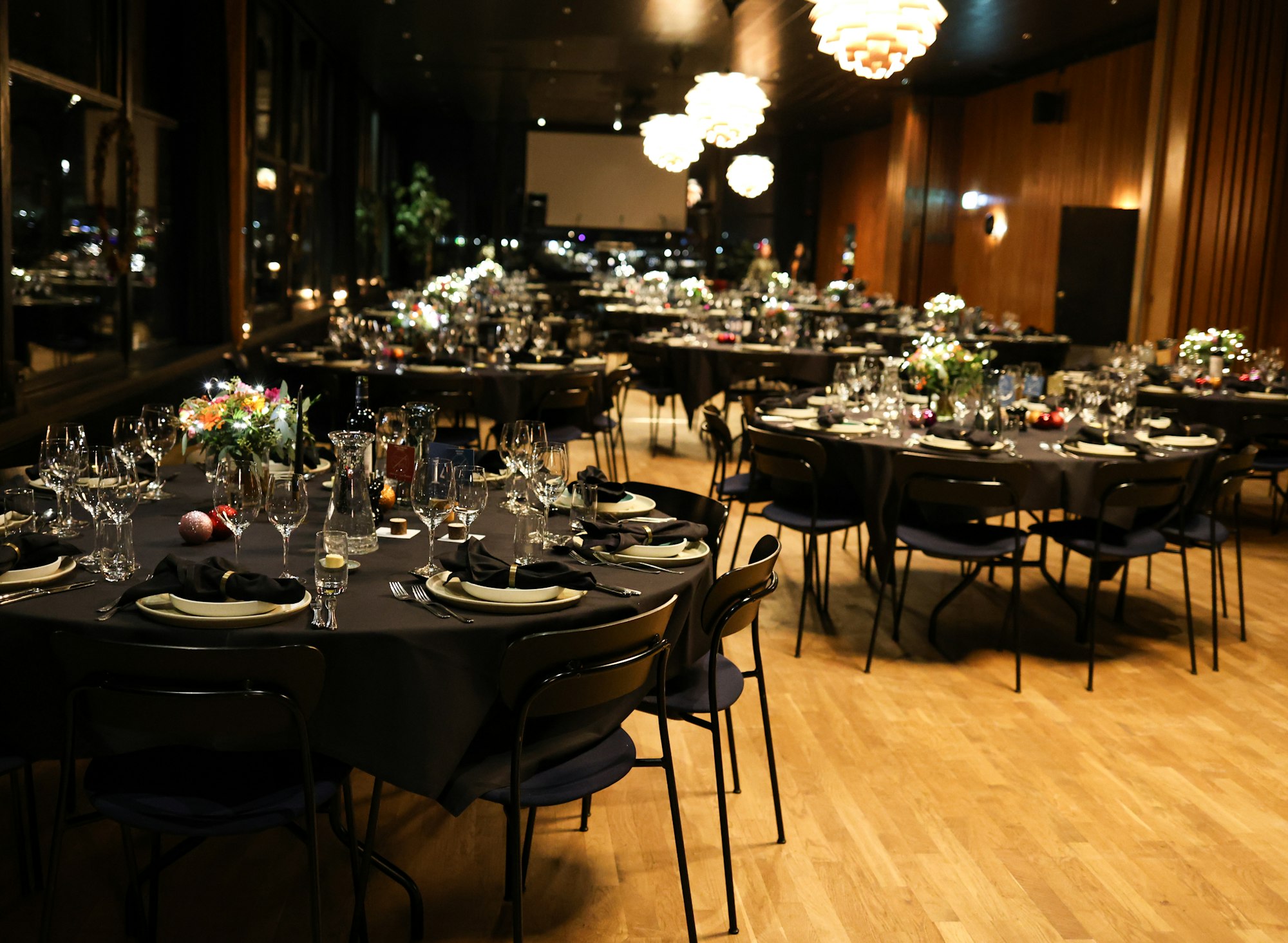
U.S. companies poured $102.8 billion into corporate training in 2025 — a 4.9% jump from the previous year — yet most of that budget still goes toward events that employees quietly dread. If the gap between what training costs and what it delivers has ever kept you up at night, you are not alone. The modern workshop is an entirely different animal than the day-long PowerPoint marathons of a decade ago, and the teams getting it right are seeing engagement lifts of 30% or more just by rethinking format and length.
Whether you are planning a summer off-site for twelve engineers, a company-wide manager-enablement series, or a one-shot product training for a newly acquired team, the stakes have rarely been higher. AI disruption, hybrid-first workforces, and compressed attention spans have pushed L&D teams to design workshops that actually change behavior — not just fill calendars. This guide walks through every stage of planning a workshop or training event that participants finish, remember, and act on.
Key Takeaways
- U.S. corporate training spend hit $102.8 billion in 2025, with the average company spending $874 per learner — up from $774 the previous year.
- 91% of companies plan to increase AI-related L&D investment in 2026, making workshop content design a moving target that must be refreshed constantly.
- Engagement rises 30% when workshops are compressed to 90 minutes instead of stretched to half- or full-day formats.
- A great workshop is 70% design, 20% facilitation, 10% logistics — most planners invert that ratio and wonder why outcomes disappoint.
- Budget allocation rule of thumb: venue 25%, facilitator/content 30%, food & beverage 15%, materials and tech 15%, buffer 15%.
- Multi-modal facilitation — in-person, online, and asynchronous combined — is now the default, not a premium upgrade.
Table of Contents
- The State of Corporate Workshops in 2026
- Define Goals and Learning Outcomes
- Design for Engagement: Format, Length, and Flow
- Choose the Right Venue and Setup
- Build the Agenda and Learning Activities
- Facilitation Best Practices
- Technology, Tools, and Hybrid Considerations
- Budget, Logistics, and Pre-Event Checklist
- Measure Success: Post-Workshop Evaluation
- Frequently Asked Questions
1. The State of Corporate Workshops in 2026 {#state-of-workshops}
Workshops and training events have undergone one of the quietest but most important transformations in the corporate-events space. Five years ago, “training day” meant a hotel ballroom, a buffet lunch, and a presenter reading from slides until 4pm. In 2026, that format would lose half the audience to their laptops before the morning coffee break.
The money is still flowing — but priorities have shifted
U.S. training expenditures climbed to $102.8 billion in 2025, up from $98 billion in 2024. That growth is concentrated in a few specific buckets:
| Priority Area | Share of 2026 Budget Growth |
|---|---|
| Management / supervisory training | 30% |
| AI skills and tool enablement | 25% |
| Interpersonal and soft skills | 22% |
| Onboarding and ramp | 21% |
| Compliance and safety | Flat or declining |
91% of companies plan to increase AI spending in L&D in 2026, and 85% plan to grow upskilling investment through 2030. The story is no longer “do we train?” — it is “which two or three topics matter most, and how fast can we ship them?”
What has changed about the workshop itself
Three structural shifts now shape every well-run workshop:
- Sessions have gotten shorter. The three-hour block is dead. Modular 60- to 90-minute sessions now carry the load, often strung together across two or three days instead of packed into one.
- Multi-modal is the baseline. Pure in-person is rare. Pure virtual is rarer. The norm is hybrid with asynchronous prework and follow-up — what facilitators now call “blended by default.”
- Facilitation is treated as a craft. 31.4% of organizations now employ in-house facilitators, and the role has been upgraded from “workshop host” to dedicated learning architect.
The practical implication is that a workshop is no longer a single event on a single day. It is a sequence: prework → main session → practice → follow-up. The planners who still think of it as a standalone calendar block are the ones getting disappointing results.
Per-learner spend tells the real story
Across the market, average per-learner training spend reached $874 in 2025, up from $774 the year before. That figure hides a surprising pattern by company size:
- Small firms (under 500 employees): $1,091 per learner
- Midsize firms (500-10,000): $782 per learner
- Large firms (10,000+): $468 per learner
Large firms get more efficiency from scale, but small and midsize companies often deliver the highest-impact workshops precisely because they cannot afford to waste a single training hour. If you are planning with a tight budget, that ratio should be reassuring — tightly-designed, small-cohort workshops consistently outperform their lavishly-funded counterparts.
2. Define Goals and Learning Outcomes {#define-goals}
Every great workshop starts with a cold, honest question: what should be different in the organization the week after this event? Planners who cannot answer that in one sentence are not ready to book a venue.
Translate business goals into behaviors
The most common planning failure is stopping at topic-level goals — “train the team on our new CRM,” “upskill managers on feedback.” Those are inputs, not outcomes. Push each goal one layer deeper:
| Vague Goal | Measurable Outcome |
|---|---|
| “Train the team on the new CRM” | “Every AE logs opportunities in the new CRM within 24 hours of a customer call.” |
| “Upskill managers on feedback” | “Every manager has delivered one written feedback summary to each direct report by Q3.” |
| “Improve product knowledge” | “Support reps resolve 80% of Tier-1 tickets without escalation, up from 65%.” |
Once the outcome is written in behavior terms, every agenda decision has a reference point. Activities that move the needle on the behavior stay. Activities that only “cover the content” get cut.
The Four-Question Gate
Before committing to a workshop at all, run every proposed session through four questions:
- Is this a skill gap or an information gap? Skill gaps need practice. Information gaps need documentation, not a workshop.
- Can the outcome be achieved in under 90 minutes of synchronous time? If not, break it into a series.
- Will the environment support the new behavior after the workshop? Managers, tooling, incentives all need to reinforce it.
- What is the cost of not running this workshop? If the honest answer is “nothing measurable,” consider an async alternative.
Roughly one in three workshop requests fail at least one of these gates. Filtering them out protects both the L&D budget and the team’s trust in training as a mechanism that actually works.
Define the learner persona
Who is in the room matters more than any curriculum choice. A workshop for new hires is fundamentally different from a workshop for senior leaders. Clarify:
- Prior knowledge: What can you assume they already know?
- Context of use: When and where will they apply what they learn?
- Failure modes: What mistakes do they make today that the workshop should prevent?
- Motivation: Are they there because they want to be, or because they were told to be?
This persona work is what separates workshops that feel tailored from ones that feel generic. The same three-hour block, designed for a different persona, produces a completely different experience.
3. Design for Engagement: Format, Length, and Flow {#design-for-engagement}
The era of the day-long workshop is over. Research from SessionLab’s 2025 State of Facilitation report found that engagement rises 30% when sessions are compressed to 90 minutes — but only when the compression is paired with clear pre-work and disciplined facilitation.
Pick the right format for the goal
Not every learning outcome deserves a workshop. Here is a practical matrix:
| Learning Goal | Best Format | Why |
|---|---|---|
| Procedural skill (e.g., use a new tool) | Hands-on lab, 90 min | Requires practice with feedback |
| Conceptual understanding | Async video + short synchronous Q&A | Concepts absorb better solo with time to reflect |
| Behavioral change (feedback, coaching) | Role-play workshop, 2-3 hours across two days | Needs practice, observation, and repetition |
| Cross-functional alignment | Facilitated working session, half day | Needs real-time negotiation |
| Executive strategy | Off-site retreat, 1-2 days | Needs deep focus and informal interaction |
| Compliance knowledge | Async e-learning + assessment | Coverage is the goal, not transformation |
The worst outcomes happen when planners pick the workshop format by default — usually a full-day in-person event — instead of letting the goal drive the format.
The 90-minute core
For modern workshops, 90 minutes is the sweet spot for a single focused session. Here is a tested flow:
- 0-10 min: Framing. Why this topic matters, what success looks like, how the next 80 minutes will be spent.
- 10-25 min: Anchor content. Short, high-density input — usually a demo, case study, or framework.
- 25-60 min: Practice. The longest block. Learners apply the content to their own situation.
- 60-80 min: Share and sharpen. Small groups share outputs; facilitator pulls out patterns and misconceptions.
- 80-90 min: Commitment. Each participant writes a specific, time-bound action they will take this week.
Notice that over half the session is practice, not presentation. That ratio is uncomfortable for content-heavy trainers who like to “cover the material,” but it is the ratio that produces behavior change.
Cognitive load and pacing
Adult learners hit a cognitive-load ceiling around 15-20 minutes of passive input. Any longer and retention drops sharply. Two common rescue tactics:
- The 15-minute rule. Never go more than 15 minutes without switching mode — from listening to discussing, watching to doing, group to solo.
- The energy curve. Schedule high-energy, interactive activities right after lunch and at the 3pm afternoon slump. Save reflective solo work for first thing in the morning when attention is sharpest.
Designing multi-day workshops
When a workshop must span multiple days, resist the urge to fill every hour. Build in:
- Asynchronous prework (30-60 min): Reading, pre-assessment, or a reflection prompt. Frees the live session to be pure practice.
- Evening downtime: No “optional” dinner activities the first night. Tired learners on day two are useless learners.
- Day-two application: Day one teaches the framework; day two applies it to the learner’s actual work. Skipping application is the single biggest reason multi-day workshops fail to stick.
4. Choose the Right Venue and Setup {#choose-venue}
Venue affects learning more than most planners admit. The same agenda in the wrong room loses 20-30% of its effectiveness — sometimes all of it.
In-person venue criteria
For in-person workshops, evaluate venues against these criteria in order:
- Room flexibility. Can tables be rearranged? Fixed auditorium seating kills interactive work.
- Natural light. Windowless conference rooms drain energy by hour two.
- Breakout space. Is there room for 4-6 small groups to work without stepping on each other?
- Wall space. Can participants post work on walls with tape or sticky notes? This matters more than screens.
- Acoustic control. Can 40 people have six simultaneous conversations without deafening each other?
- Tech reliability. Wi-Fi that handles 50+ devices simultaneously, not just “Wi-Fi.”
- Refreshment flow. Can people grab coffee without disrupting the session?
A good hotel ballroom often scores lower on these than a mid-tier co-working space or a purpose-built training facility. For smaller groups (under 20), office conference rooms are usually worse than a booked off-site — the temptation to “step back to my desk for a minute” is almost irresistible.
Virtual workshop setup
Virtual workshops have their own venue requirements, which live in the tooling stack:
- Video platform: Zoom, Google Meet, or Microsoft Teams — all adequate, none great. Pick whichever your audience already uses to minimize login friction.
- Collaboration canvas: Miro, Mural, or FigJam for sticky-note work and visual thinking.
- Breakout rooms: Test them in advance. Breakout rooms that dump participants back into the main room unpredictably wreck the flow.
- Async back-channel: Slack, Teams, or a shared doc for questions that do not fit the current discussion.
The biggest virtual-workshop mistake is trying to replicate the in-person experience move for move. Virtual requires its own design — shorter sessions (60 min, not 90), more frequent breaks, and more visual anchoring than in-person.
Hybrid workshops: the hardest format
Hybrid workshops — part in-person, part remote — are now common and remain the hardest format to run well. The failure mode is almost always the same: remote participants become second-class citizens, spoken to but not with.
The single best fix is two facilitators: one driving content, one exclusively monitoring and advocating for remote participants. Facilitator-producer pairings are standard in top-tier training shops for this exact reason.
Other hybrid must-dos:
- A single shared digital canvas for all exercises — no in-person sticky notes that remote people cannot see.
- Camera on the room’s whiteboard, not just the facilitator’s face.
- Assign each remote participant a named “in-room buddy” who brings them into discussions.
- Take every vote and every breakout grouping digitally, not by show of hands.
5. Build the Agenda and Learning Activities {#build-agenda}
The agenda is where workshop design either lives or dies. Most draft agendas read like a lecture outline — “10:00 Introduction, 10:30 Overview, 11:00 Deep Dive.” That is a syllabus, not a workshop.
Start from the outputs backward
For each session, write down what participants will produce or demonstrate by the end. Examples:
- A written 90-day action plan for their team.
- Three recorded feedback conversations using the new framework.
- A prioritized list of the top five customer pain points, agreed by the cross-functional group.
- A working prototype built using the new tool.
Then, and only then, work backward: what has to happen in the session for that output to exist?
Activity patterns that consistently work
A handful of activity patterns show up again and again in workshops that deliver:
- Think-Pair-Share. Individuals reflect silently (2 min), discuss with a partner (5 min), then the pair shares to the group (3 min). The silent phase is what unlocks quality thinking.
- Gallery walk. Small groups post their work on walls or a digital board. Everyone walks around, leaves comments. Discussion follows.
- 1-2-4-All. One, then two, then four, then whole group. Each round compresses ideas. Brilliant for generating and prioritizing.
- Role play with observers. Two people act out a scenario; a third observes using a checklist. Rotate roles. This is the workhorse for soft-skills training.
- Case study deep-dive. Small groups analyze a real situation and recommend action. Best for decision-making skills.
- Retro-style prompts. “What worked? What didn’t? What will you try differently?” Useful as a closer.
Avoid the ice-breaker trap
Icebreakers are workshop empty calories. Unless they tie directly to the workshop content, cut them. Adult learners find forced-fun icebreakers condescending, and they burn precious energy. Better openers:
- A one-minute personal context share tied to the topic (“one thing that is hard about giving feedback to your team right now”).
- A quick poll that produces data the workshop will use (“raise your hand if you have ever…”).
- A brief participant-drawn picture of the problem they are here to solve.
Write a facilitator-friendly agenda
Your final agenda should have, for each segment:
- Exact time range (not just duration)
- Purpose (“by the end of this block, participants will have…”)
- Format (individual, pair, small group, whole group)
- Materials needed
- Facilitator notes on what to emphasize and what to watch for
- Explicit transition (“when the last group finishes, move to…”)
A well-written agenda lets a second facilitator pick up the session if the primary gets sick. A sloppy one cannot survive even a small deviation.
6. Facilitation Best Practices {#facilitation}
The facilitator is the single biggest lever in workshop success, outweighing venue, catering, and even content quality. A skilled facilitator can rescue a mediocre agenda; a weak one can kill a brilliant one.
The seven habits of effective facilitators
From observing hundreds of workshops, a consistent set of habits separates great facilitators from average:
- They time-box ruthlessly. When an exercise is scheduled for 20 minutes, they end it at 20 minutes — even if “it was just getting good.” Consistent time discipline trains participants to produce under constraint.
- They ask more than they tell. Open questions dominate. “What are you noticing?” “What surprises you?” “What would change if you tried that?”
- They honor silence. After a question, they wait 5-10 full seconds. Most facilitators break silence at 2 seconds, which trains participants that someone else will always fill the gap.
- They name the dynamic, not the person. “I’m noticing we’re staying at the surface — what’s underneath this topic?” rather than “Sarah, you haven’t spoken.”
- They surface dissent early. They actively invite the objections they sense are forming in the room. Unspoken disagreement poisons the rest of the workshop.
- They separate content from process. They do not pretend to be the subject-matter expert; they are the expert on how the room works.
- They close with commitment, not applause. Every session ends with each participant naming one specific action, not a group cheer.
Psychological safety is the ground floor
The SessionLab 2025 report and nearly every other facilitation study now treats psychological safety as a baseline requirement, not a premium feature. Participants who do not feel safe to make mistakes, ask naive questions, or disagree will produce theater, not learning.
Practical ways to build it in the first 10 minutes:
- The facilitator goes first with a personal admission of what is hard about the topic.
- Establish a small, visible group agreement — “what do we need from each other for this to work?” — and post it.
- Explicitly welcome wrong answers: “I’d love to hear the messy first draft of your thinking, not the polished version.”
- Avoid public ranking or public “best answer” callouts in the first session.
Managing common disruptions
Every facilitator will hit these situations:
- The dominator. One person speaks far more than others. Fix: “Great point — I want to hold that and hear from someone who hasn’t spoken yet.” Then call on a quieter participant.
- The skeptic. A participant visibly disengaged or openly hostile. Fix: address it privately at a break. “I noticed some frustration — want to share what’s behind it?” Do not let it fester; do not confront publicly.
- The tangent. Group drifts into an interesting but off-topic discussion. Fix: “This is important — let’s park it” and write it on a visible “parking lot” for later.
- The flatline. Energy crashes, no one responds. Fix: stand up, physically move the group, switch format, take an unscheduled 5-minute break. Do not push through.
7. Technology, Tools, and Hybrid Considerations {#technology}
Workshop technology has exploded — and with it, the risk of what facilitators now openly call “shiny-tool overload.” The point of tech is to amplify human connection and capture group thinking, not to add complexity.
The minimum viable tech stack
Most workshops need only five tools:
- Video conferencing (if remote participants): Zoom, Meet, Teams.
- Collaboration canvas: Miro, Mural, or FigJam.
- Polling: Slido, Mentimeter, or built-in platform polls.
- Shared document: Google Docs or Notion for agenda and notes.
- Messaging back-channel: Slack or Teams for async questions and post-workshop follow-up.
Anything beyond this should earn its place by making a specific activity materially better. AI note-takers, breakout-room schedulers, and automated transcription are useful — when they replace human effort, not when they add another thing participants must learn.
Pre-workshop tech checklist
- Every tool tested by the facilitator with the actual participant list, at least 48 hours in advance.
- Login instructions sent to participants 24 hours in advance with screenshots.
- A “tech buddy” assigned to help anyone who gets stuck in the first 5 minutes.
- Backup plan for each critical tool — if Miro goes down, what’s Plan B?
- Wi-Fi stress-tested with a device count matching the expected audience.
- Recording consent captured in writing before the session starts.
AI in workshop design
The most practical uses of AI in workshops today:
- Agenda drafting: Ask AI to critique your draft agenda against a workshop-design best-practices checklist.
- Scenario generation: For role-plays, generate diverse scenarios faster than writing them from scratch.
- Post-session summary: Transcribe and summarize the session automatically, giving participants a clean artifact.
- Personalized follow-up: Tailor post-workshop nudges to each participant’s stated commitment.
What AI is not good for yet: reading the room, adjusting in real time, or replacing a human facilitator. The workshops that use AI as a force multiplier behind the scenes outperform both tech-free and tech-heavy approaches.
8. Budget, Logistics, and Pre-Event Checklist {#budget-logistics}
A well-designed workshop can be ruined by bad logistics. A mediocre one can be elevated by great logistics. Either way, treat the operational layer with the same rigor as the content.
Budget breakdown template
For a typical one-day in-person workshop of 20 people, a workable allocation:
| Category | % of Budget | What it Covers |
|---|---|---|
| Venue & AV | 25% | Room rental, projector, mics, Wi-Fi upgrade |
| Facilitator / content design | 30% | External facilitator fees or internal design time |
| Food & beverage | 15% | Breakfast, lunch, snacks, coffee |
| Materials & supplies | 10% | Workbooks, printing, sticky notes, markers |
| Tech & tools | 5% | Miro subscription, polling tool, software licenses |
| Travel (if off-site) | Variable | Transit, accommodation |
| Buffer / contingency | 15% | Unexpected overages — there are always some |
Virtual workshops shift this dramatically: venue and food drop to near zero, but facilitator time and tooling consume a larger share.
The 30-day pre-event checklist
- T-30: Goals, outcomes, and success metrics confirmed with sponsor.
- T-28: Agenda first draft complete.
- T-25: Venue confirmed; AV and catering booked.
- T-21: Participant list finalized; invitations sent.
- T-14: Prework assigned; facilitator guide complete.
- T-10: Materials ordered; printing scheduled.
- T-7: Prework completion check; nudge stragglers.
- T-5: Full dry run with co-facilitator or a trusted colleague.
- T-3: Final reminder to participants with tech instructions.
- T-2: Materials printed and packed; room plan diagrammed.
- T-1: Walk the physical venue or test the virtual setup end-to-end.
- T-0: Arrive 90 minutes early; test every tool; greet participants by name as they arrive.
The often-forgotten logistics items
- Dietary restrictions: Ask on the invitation, not the morning of. Plan for vegetarian, vegan, gluten-free, and at least one major allergen accommodation.
- Accessibility: Wheelchair access, captions for any video, seating that supports varied mobility needs.
- Name tags and seating chart: For groups over 12, a seating chart that mixes roles and departments prevents the “sit with your friends” effect that kills cross-functional learning.
- Room temperature: Cold rooms keep people alert; warm rooms induce naps. Target 68-70°F.
- Phone policy: Name it explicitly at the start. “Phones face-down during exercises, on during breaks” works better than “no phones.”
9. Measure Success: Post-Workshop Evaluation {#measure-success}
85% of organizations measure training success by “the number of employees trained” — which is effectively not measuring success at all. The number of people in the room tells you nothing about whether anything changed afterward.
The Kirkpatrick ladder, adapted for 2026
The classic four levels remain useful, but with modern adjustments:
| Level | What it Measures | How to Capture |
|---|---|---|
| 1. Reaction | Did participants enjoy it? | Immediate post-session survey (3 questions, max) |
| 2. Learning | What did they learn? | Short quiz or demonstration, same-day |
| 3. Behavior | Are they doing things differently? | Manager observation + self-report at 30 days |
| 4. Results | Did it move a business metric? | Tied to the outcome defined in Step 1 |
The critical shift in 2026 is weighting these differently. Level 1 (reaction) is close to meaningless — engaging workshops often change nothing, and boring ones sometimes change everything. The focus should be on Levels 3 and 4.
The 30-day follow-up protocol
A workshop without a follow-up is a workshop that will evaporate within two weeks. The minimum follow-up protocol:
- Day 1 (end of session): Each participant commits in writing to one specific action.
- Day 7: Automated email asking “how did your first attempt go?” with a 60-second response form.
- Day 14: Facilitator-led 30-minute virtual check-in with the cohort. Share wins, troubleshoot obstacles.
- Day 30: Manager check-in on behavior change; workshop-effectiveness review with L&D.
- Day 90: Business-metric review tied to the original outcome.
This cadence is what separates workshops that change organizations from workshops that fill calendars. The cost of the follow-up is small — often 10-15% of the workshop budget — and it is what unlocks the other 85%.
Red flags in post-workshop data
- High satisfaction, no behavior change. Usually means the workshop was entertaining but not challenging.
- Low satisfaction, strong behavior change. Often means the workshop was uncomfortable but effective. Do not over-correct.
- Strong behavior change in week one, fading by week four. Environmental fit is wrong — managers or tooling are not reinforcing the new behavior.
- Variance by cohort. A few participants apply it, most do not. Usually a pre-work or selection problem, not a content problem.
10. Related Articles {#related}
- Corporate Event Ideas: 25 Unique Themes for 2026
- How to Plan a Conference: The Complete Guide
- Team Building Events: 30 Activities That Actually Work
Frequently Asked Questions {#faq}
How long should a corporate workshop be?
For a single focused topic, 90 minutes is the target. Multi-topic workshops should be designed as a series of 90-minute modules, ideally spread across two or more days with asynchronous work in between. Full-day single-topic workshops almost always overrun their useful cognitive load by hour three and produce diminishing returns.
What is the ideal group size for a workshop?
12-25 participants is the sweet spot for most interactive workshops. Below 8, group dynamics get thin and discussions lack diversity. Above 30, small-group work becomes unwieldy and the facilitator cannot track individual participation. For groups over 50, split into parallel workshops with the same content rather than scaling up a single room.
How far in advance should I plan a workshop?
For internal workshops of 20 or fewer people, 4-6 weeks is sufficient. For external facilitators or events over 50 people, budget 8-12 weeks. Anything under two weeks is possible but compromises prework quality, which is what makes the live session effective.
Should I hire an external facilitator or use an internal one?
External facilitators make sense when the topic requires neutrality (e.g., leadership conflict, strategy disagreements), when internal expertise is thin, or when the event is high-stakes enough that no one on the team can afford to be “off” that day. Internal facilitators are better when the context is complex, when follow-through requires organizational knowledge, or when the topic recurs often enough to justify building the skill in-house. The best programs blend both — internal facilitators for recurring topics, external for one-off or sensitive sessions.
How do I measure the ROI of a workshop?
Tie the workshop to a specific business metric defined before the event: time-to-ramp for new hires, deal-close rate for sales training, ticket-resolution rate for support training. Measure that metric 30, 60, and 90 days after the workshop against a pre-workshop baseline. Compare workshop-trained cohorts against untrained cohorts where possible. ROI calculated only on satisfaction surveys or quiz scores is not ROI — it is activity.
Are hybrid workshops worth the complexity?
Yes, when done well — but they require roughly 1.5x the design and facilitation effort of pure in-person or pure virtual. If your organization is hybrid by default, invest in the skills and tooling to run hybrid workshops well. If you are only occasionally hybrid, consider running pure-virtual events instead and letting in-person be genuinely in-person. The worst outcome is running hybrid as an afterthought and alienating remote participants.
What is the single biggest mistake workshop planners make?
Optimizing for the session instead of the surrounding behavior change. The session is only 10-20% of the total impact. The other 80-90% lives in goal-setting, prework, follow-up, and environmental reinforcement. Planners who spend 90% of their energy on the live session and 10% on everything else are inverting the ratio that actually drives outcomes.
How much should I spend per participant?
Industry benchmarks put per-learner spend at $874 on average in 2025, with small companies spending more ($1,091) and large companies less ($468). For a high-stakes workshop, spending above the benchmark is justifiable. For routine training, staying at or below is reasonable — the differentiator is rarely budget; it is design quality and follow-through.
Conclusion
A workshop in 2026 is not an event. It is a designed sequence of moments — pre-work, live session, practice, follow-up — that together produce a specific behavior change in a specific group of people. The organizations getting disproportionate value from the $102.8 billion U.S. training market are the ones that treat workshop planning as a craft, not a calendar-scheduling exercise.
The fundamentals have not changed: clear outcomes, tight format, skilled facilitation, disciplined follow-up. What has changed is the sophistication with which the best teams execute those fundamentals — shorter sessions, hybrid-by-default design, AI as a quiet assistant, and an unflinching focus on what actually shifts after the session ends.
If you are about to plan a workshop, start with the one question most planners skip: what should be different the week after? Write that down in one sentence. Everything else — venue, agenda, tools, budget — flows from that answer. Do that well and the rest of the planning becomes almost easy. Skip it and no amount of budget or venue polish will rescue the outcome.
Ready to plan your next workshop or training event? EventCortex makes it simple to coordinate participants, manage RSVPs, and share agendas in one place. Explore our workshop and training templates to get started with a proven structure.